

When a Quiet Construction Site Turns Into a Security Risk
Imagine arriving at a Langley construction site on Monday morning and discovering that expensive tools are missing, materials have been moved, and nobody knows when it happened.
The site looked quiet. The crews had left. Nothing seemed unusual.
But that quiet period may have created an opening.
Construction Site Security matters because unfinished properties can contain equipment, machinery, wiring, fuel, materials, and restricted areas. What happens when nobody is watching the site after hours?
For contractors, builders, developers, and site managers, the issue is not simply theft. Trespassing, vandalism, property damage, unsafe access, and unclear incident timelines can also create operational headaches.
Here are six common risks worth considering before leaving a construction property without an appropriate security plan.
Why Construction Sites Can Become Easy Targets
A construction property rarely stays the same for long. One week may involve open excavation areas. The next may bring new machinery, temporary structures, electrical systems, building materials, or additional access points.
That constant change can make site security more complicated than it first appears.
Valuable Equipment
Construction sites may contain power tools, machinery, vehicles, copper wiring, fuel, building materials, generators, and other costly items.
Some equipment may remain outdoors overnight because moving it after every shift is impractical. Materials may also be stored in locations that are convenient for workers but visible from outside the property.
That creates a question worth asking: What is sitting on the site after the final worker leaves?
A security plan can take equipment storage, site layout, and after-hours conditions into account.
Open Access Points
Temporary fencing, unfinished doors, gates, loading areas, parking entrances, and other openings can change throughout a project.
An access point that was controlled last month may no longer be controlled today.
Construction security needs to account for these changes. A site manager may need to review gates, fencing, lighting, and areas where people could enter without permission.
Limited After-Hours Activity
A busy construction site can become remarkably quiet once crews leave.
Evenings, weekends, holidays, and overnight periods may have far fewer people on the property. That does not mean an incident will occur, but it can make unusual activity harder for site management to notice.
This is where Construction Site Security can become part of an after-hours site-management plan.
Changing Site Conditions
A construction project evolves constantly.
New buildings appear. Materials move. Temporary roads shift. Equipment arrives and leaves. Contractors work different schedules. New doors and entrances become usable.
A security arrangement that made sense during excavation may not fit the project once framing, electrical work, interior construction, or finishing begins.
Regular reviews can help site managers identify new access and monitoring concerns as work progresses.
6 Common Risks of Skipping Construction Site Security
What could actually go wrong?
There is no single answer because every property has different conditions. However, six recurring risks deserve attention when a construction site has limited security coverage.
1. Equipment and Material Theft
A construction site can contain items that are costly to replace and inconvenient to replace quickly.
Tools, copper wiring, fuel, machinery, building materials, and other supplies may all create potential targets.
Imagine a crew arriving Tuesday morning and discovering that several tools are missing. The first task is no longer construction. Workers must determine what disappeared, managers must investigate the situation, and replacement items may need to be arranged.
The impact can include:
- Replacement costs
- Project interruptions
- Delayed work
- Additional administrative work
- Insurance-related paperwork
- Changes to equipment schedules
The financial impact may extend beyond the missing item itself.
The absence of a specific tool for a scheduled task could delay several workers and push back other activities.
Security for construction sites can include monitoring practices that give site managers another layer of oversight around equipment and material storage.
2. Unauthorized Access and Trespassing
A construction site is not a public playground.
Yet unfinished structures, large open areas, machinery, temporary buildings, and unusual site features can attract people who have no reason to be there.
A person may enter out of curiosity. Another may be looking for materials. Someone else may simply ignore a restricted area.
Whatever the reason, unauthorized entry creates another issue: Who is responsible for knowing that the person is there?
Potential access concerns can involve:
- Trespassers
- Curious members of the public
- Unauthorized workers
- Vandals
- After-hours visitors
An unsecured opening near a gate or fence may seem minor during the day. At night, however, the same opening can become a route onto the property.
Construction site guards may help monitor designated areas and report unusual activity according to the site’s procedures.
3. Vandalism and Property Damage
Not every security incident involves something being stolen.
A damaged fence. Broken lighting. Defaced walls. Damaged electrical components. A damaged temporary structure.
Each issue can create work that was never part of the original construction schedule.
Consider a site where a newly completed section is damaged before the next phase begins. The project team may need to arrange repairs, inspect the affected area, clean up debris, and adjust schedules.
Even relatively minor vandalism can consume time.
For a construction manager already coordinating subcontractors, deliveries, inspections, and deadlines, an unexpected repair can create another task on an already crowded list.
This is one reason Construction Site Security may be considered alongside fencing, lighting, cameras, access controls, and other site measures.
4. Project Delays and Added Costs
Here is the risk that can spread further than expected.
A missing item may seem like an isolated incident. But what if that item was required for tomorrow’s scheduled work?
A damaged area may appear manageable. But what if workers cannot continue until repairs are completed?
Security incidents can create several operational consequences:
- Missing equipment
- Damaged materials
- Work stoppages
- Replacement purchases
- Cleanup
- Repairs
- Additional labour requirements
Construction schedules are often connected. One delay can affect deliveries, subcontractors, inspections, and later stages of work.
That does not mean every security incident will cause a major delay. It means site managers should consider how an avoidable interruption could affect the wider project.
5. Safety Concerns on Unsecured Sites
An unauthorized visitor may not know where the hazards are.
An unfinished building can contain open stairwells, exposed areas, temporary electrical systems, construction debris, excavation zones, machinery, or restricted work areas.
What happens if someone enters without knowing which areas are safe to access?
Potential concerns include:
- People entering unfinished structures
- Children accessing restricted areas
- Visitors approaching machinery
- Open excavations
- Unprotected access points
- Hazardous construction zones
Security personnel are not a replacement for proper construction safety procedures, barriers, signage, lighting, training, or regulatory requirements.
Instead, security coverage can form another layer within a broader site-management plan.
6. Difficulty Knowing What Happened
Perhaps the most frustrating question after an incident is simple:
When did it happen?
If nobody was monitoring the property, the timeline may be unclear.
A site manager could discover missing materials at 7 a.m. But did they disappear overnight? Earlier in the week? During a delivery? During a shift change?
Without on-site observations, establishing the sequence may be difficult.
Construction site monitoring can provide another source of observation through patrol activity, access monitoring, and incident reports.
Depending on the arrangement, reports may document observations such as unusual activity, damaged fencing, open gates, or other site conditions.
That information can help management review what happened and decide whether site procedures need to change.
Why Construction Site Security Matters in Langley?
Construction projects in Langley, BC, can involve residential development, commercial properties, renovations, new structures, equipment movement, material deliveries, and multiple contractors.
Each project has its own layout and schedule.
One site may have a single controlled entrance. Another may cover a much larger property with several gates, temporary roads, storage areas, and work zones.
The security considerations can also change as construction progresses.
For example, a site may begin with earthmoving equipment and open excavation. Later, it may contain finished areas, electrical systems, stored materials, and new entrances.
Contractor schedules can add another layer. Crews may arrive early, work late, or continue during weekends.
For site managers in Langley, the key question is not whether every construction site faces the same risk.
It is whether the property’s current conditions have been reviewed recently.
What Can Happen When a Construction Site Is Left Unmonitored?
Consider this fictional example.
Workers leave a Langley construction site at 6 p.m. The gates are closed, but one temporary access point is not fully secured.
By midnight, someone enters through that opening.
A few materials are moved. A storage area is disturbed. Some equipment is damaged.
Nobody sees the activity.
At 7 a.m., workers arrive and notice something is wrong.
Now the project team has several questions.
What happened? When did it happen? Which areas were accessed? Was anything removed? What needs repair? Can the scheduled work continue?
The incident itself may be limited. Yet the follow-up can involve several people and several hours.
This example does not represent a real Langley incident. It illustrates how a small site-management gap can create a larger operational issue.
Signs Your Construction Site May Need Additional Security
The warning signs may already be there.
A site manager can review the property and ask whether any of these conditions apply:
- Repeated trespassing concerns: People have been seen entering areas without permission.
- Valuable equipment stored overnight: Machinery, tools, fuel, or materials remain on-site after crews leave.
- Materials kept outdoors: Supplies are stored in exposed locations.
- Multiple uncontrolled access points: Several gates, openings, or entrances require monitoring.
- Limited visibility after dark: Lighting does not provide clear visibility across important areas.
- Previous vandalism: Damage has occurred, and the cause remains unclear.
- Unexplained property damage: Fencing, equipment, structures, or materials are found damaged.
- Missing tools or materials: Items cannot be accounted for after shifts.
- Large site with several entry points: The property is difficult for one person to observe.
- Evening or weekend work: Site activity extends beyond standard construction hours.
None of these signs automatically means guards are required.
They do indicate that a security review may be worth considering.
How Construction Site Security Can Help?
Security personnel can perform several functions depending on the site, contract, schedule, and assigned duties.
Site Patrols
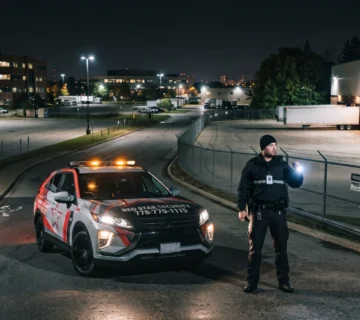
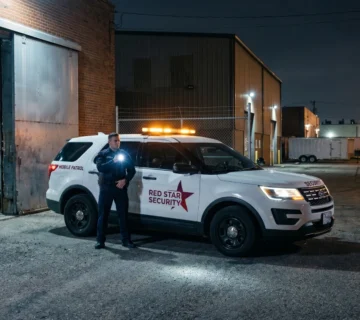
Construction site patrols can provide scheduled or mobile checks around designated areas.
Patrols may focus on gates, fencing, equipment storage, buildings, parking areas, and other locations identified by site management.
Access Monitoring
Security personnel may monitor designated entry and exit points and follow site procedures for authorized access.
This can be useful where multiple contractors, deliveries, and workers use the same property.
Incident Reporting
A clear reporting process can help document unusual activity, property damage, access concerns, or other observations.
Written reports can give site management information to review after an event or during routine site meetings.
After-Hours Monitoring
Construction security can be particularly relevant during periods when regular crews are not working.
Coverage can be scheduled around evenings, overnight periods, weekends, holidays, or other periods based on site requirements.
Visible Security Presence
A visible security presence can make unauthorized site access less straightforward.
It can also provide a point of contact for reporting unusual activity according to the agreed site procedures.
No security arrangement can guarantee that every incident will be prevented. The purpose is to add another layer of oversight to the property’s existing controls.
Common Mistakes Construction Companies Make With Site Security
Some security gaps develop because construction teams are focused on the work itself.
Assuming Fencing Alone Is Enough
Fencing can define a boundary, but it does not automatically address every access point, gate, opening, or after-hours concern.
Leaving Valuable Equipment in Exposed Areas
Tools and materials left in visible locations may create unnecessary security concerns.
Storage arrangements should be reviewed as the site changes.
Failing to Control Access Points
A temporary gate that is rarely used can still become an access route if it is left unsecured.
Ignoring Repeated Trespassing
Repeated unauthorized entry should prompt a review of the site’s access arrangements rather than being treated as an isolated annoyance.
Not Reviewing Security Needs as Work Progresses
A construction site in its early stage may have very different security requirements several months later.
Having No Clear Incident-Reporting Procedure
If nobody knows who should be notified or what should be documented, responding to an incident can become disorganized.
Treating Security as an Afterthought
Security planning is easier when considered alongside fencing, lighting, access controls, equipment storage, and site scheduling.
What to Consider Before Choosing Construction Site Security?
There is no single coverage model for every project.
Before arranging security guards for construction sites, site managers can review:
- Site size
- Number of access points
- Current construction phase
- Equipment stored on-site
- Operating hours
- Overnight activity
- Lighting
- Fencing
- Patrol frequency
- Reporting requirements
- Number of personnel needed
- Contract requirements
A small renovation site may require a different arrangement from a large multi-phase development.
The construction phase matters too.
As buildings rise, entrances change. As equipment arrives, storage needs change. As subcontractors rotate, access patterns may change.
That means Construction Site Security should be reviewed as the project develops rather than treated as a fixed decision from day one.
FAQs
What is construction site security?
Construction site security refers to measures used to monitor and protect a construction property. Depending on the project, this may include guards, patrols, access monitoring, incident reporting, and after-hours coverage.
Why do construction sites need security?
Construction sites may contain valuable equipment, materials, machinery, unfinished structures, and restricted areas. Security can provide another layer of site oversight, particularly when regular crews are away.
What risks can occur on an unsecured construction site?
Potential concerns include theft, trespassing, vandalism, property damage, unauthorized access, safety issues, and difficulty establishing when an incident occurred.
Can security guards monitor construction sites after hours?
Yes. Security coverage can be arranged for periods such as evenings, overnight hours, weekends, or holidays, depending on the site requirements and agreed schedule.
Can construction security help with trespassing concerns?
Security personnel can monitor designated areas, observe unusual activity, follow site procedures, and report unauthorized access. Their role depends on the duties established for the property.
What should I consider when securing a construction site in Langley?
Review the site’s size, entrances, fencing, lighting, equipment storage, operating hours, construction phase, contractor activity, and after-hours conditions.
How can I determine how much security coverage my site needs?
Start by reviewing the site’s layout, operating schedule, access points, equipment, material storage, and previous security concerns. From there, a security provider can discuss suitable coverage options based on the property’s requirements.
Moving Forward
A construction site may look quiet after the crews leave, but quiet does not mean secure.
Missing equipment, unauthorized access, vandalism, damaged property, project interruptions, safety concerns, and unclear incident timelines can all create additional work for a construction team.
Construction Site Security is one part of broader site management. Fencing, lighting, access controls, equipment storage, safety procedures, and clear reporting should all work together.
Before the next shift ends, take a fresh look at the property.
Which entrances are open? Where is equipment stored? What happens after dark? Who knows if something unusual occurs overnight?
For construction projects in Langley, BC, reviewing these questions can help site managers identify gaps before they become operational problems.
Need Construction Site Security in Langley? Call Red Star Security Ltd at +1 778-770-1115 to discuss security coverage for your site.




No comment